
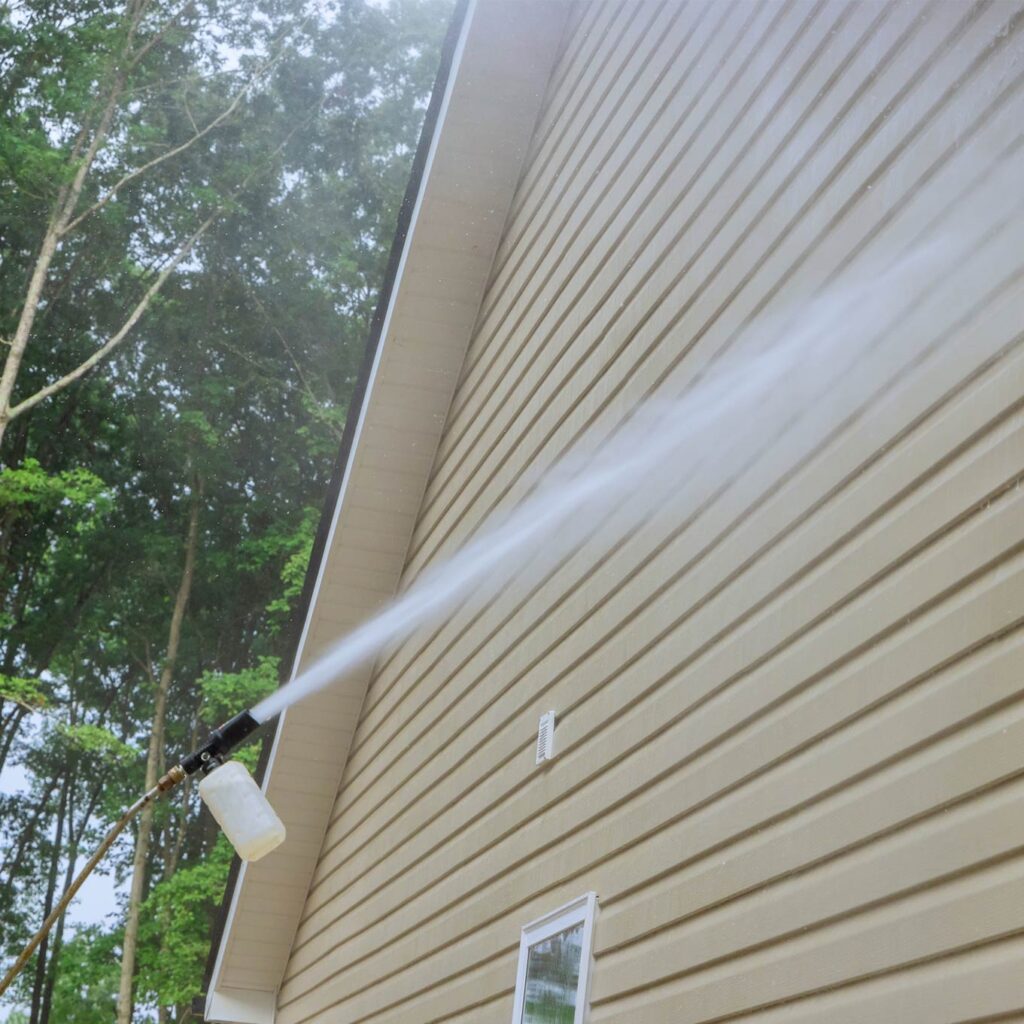
If the outside of your home is looking dirty, you may assume you need pressure washing. That makes sense. It is the term most people know, and when you are looking at a grimy driveway or siding that has seen a few Calgary seasons, you probably care more about getting it clean than what the equipment is called.
Pressure washing and soft washing aren’t quite the same, and one isn’t automatically better than the other. They simply work better on different surfaces.
Pressure washing uses more water pressure to remove dirt and buildup. Soft washing uses much lower pressure along with a cleaning solution that helps loosen what is on the surface. Around a home, it is common to need a bit of both.
Pressure Washing vs. Soft Washing at a Glance
| Pressure washing | Soft washing |
| Uses stronger water pressure | Uses lower pressure with a cleaning solution |
| Best for hard, durable surfaces | Better for more delicate exterior surfaces |
| Often used on concrete, driveways, and walkways | Often used on siding and house exteriors |
| Good for stubborn surface buildup | Cleans without relying on aggressive pressure |
When Does Pressure Washing Make Sense?
Pressure washing works especially well on hard surfaces that can handle more cleaning force. Think about the areas around your home that take the most abuse: driveways, concrete walkways, garage floors, and some patios.
After a Calgary winter, those surfaces can be left with months of dirt and grime. A garden hose may wet them, but it won’t necessarily lift everything that has worked its way into the surface.
That is where pressure washing earns its place. On durable materials such as concrete, the extra cleaning force can make a noticeable difference.
The mistake is assuming that because pressure worked well on the driveway, more pressure must also be better everywhere else. The right pressure matters more than the highest pressure available.
So, What Is Soft Washing?
Soft washing takes a gentler approach. Instead of trying to remove everything with water pressure alone, a suitable cleaning solution first loosens the dirt and buildup. You can then rinse the surface using much lower pressure.
That makes it useful for areas of the home where blasting away with high pressure could create problems.
Siding is a good example. Depending on what your home is finished with, too much pressure can damage the surface or push water where you do not want it. Some manufacturers even specifically warn against pressure washing their siding.
This does not mean siding cannot be cleaned thoroughly. It just means a gentler method can sometimes do a better job because it cleans without putting unnecessary stress on the material.
Which Method Should Be Used Around Your Home?
There is no one answer for an entire property, which is why we’re cautious about any approach that treats everything the same.
In general:
- Concrete driveways and walkways: pressure washing usually makes sense.
- House siding: a softer, lower-pressure approach is often better.
- Decks and fences: it depends on the material, finish, age, and condition.
- Concrete patios: pressure washing may work well.
- Painted or more delicate surfaces: lower pressure is usually the safer starting point.
You can probably see why a home may need both methods. The driveway and the siding are sitting only a few metres apart, but they are completely different surfaces.
That is also why homeowners do not need to worry too much about whether they are asking for “pressure washing” or “soft washing.” If what you really mean is, “My house is dirty, and I want it cleaned,” that is enough. The person doing the work should be able to look at the property and decide what makes sense.
What About Decks, Fences, and Older Surfaces?
These are the areas where a little judgment goes a long way.
A newer concrete patio is one thing. An older wood deck with stain beginning to wear away is another. The same goes for fences, brick, painted surfaces, and exterior materials that have already seen years of weather.
Before cleaning, it is worth looking at the condition of the surface and what it is made of. Peeling paint, aging wood, cracks, loose mortar, or previous repairs can change how you should approach it.
Cleaning should improve the property, not turn a small maintenance job into something that needs repair afterward.
Can You Pressure Wash Your House Siding?
Sometimes people call us and ask to have their house pressure washed when what they really mean is that the siding needs cleaning. There is nothing wrong with that. You should not have to know the right nozzle, pressure setting, or cleaning method before calling someone.
What matters is identifying the siding first and choosing an approach that is appropriate for it.
For many house exteriors, that means using less pressure than we would on a driveway or walkway. The goal of house washing is to clean the exterior while being careful with the material underneath.
Do You Have to Pick One or the Other?
Usually, no.
A home might need soft washing on the siding, pressure washing on the driveway, and a more careful approach on the deck. That is completely normal.
So if you are trying to decide between the two, the easiest way to think about it is this: pressure washing is useful when the surface can handle more force, while soft washing lets us clean surfaces where more force isn’t the answer.
A Local Approach to Exterior Cleaning
At Pro Window Cleaning Calgary, we offer both pressure washing and soft washing because homes are made up of different materials. We would rather look at what you have and choose the right approach than treat the driveway, siding, deck, and fence as though they are all the same.
As a local, family-run business, we also know most homeowners are not looking for a technical lesson when they call us. You want to know what needs cleaning, how we’ll take care of it, and that the work will be done carefully.
If your siding, driveway, patio, or other exterior areas could use some attention, contact Pro Window Cleaning Calgary and we can help you figure out the best way to clean them.
